Bordalo II – Turning Trash into Monumental Art
1. Who is Bordalo II?
Born Artur Bordalo in Lisbon in 1987, Bordalo II takes his name in honour of his grandfather, the painter Real Bordalo. Wikipedia+2Urban Nation+2
He studied at the Faculty of Fine Arts in Lisbon but never completed the course, instead shifting toward large-scale sculpture and urban interventions. getLisbon+1
2. The Concept & Materials
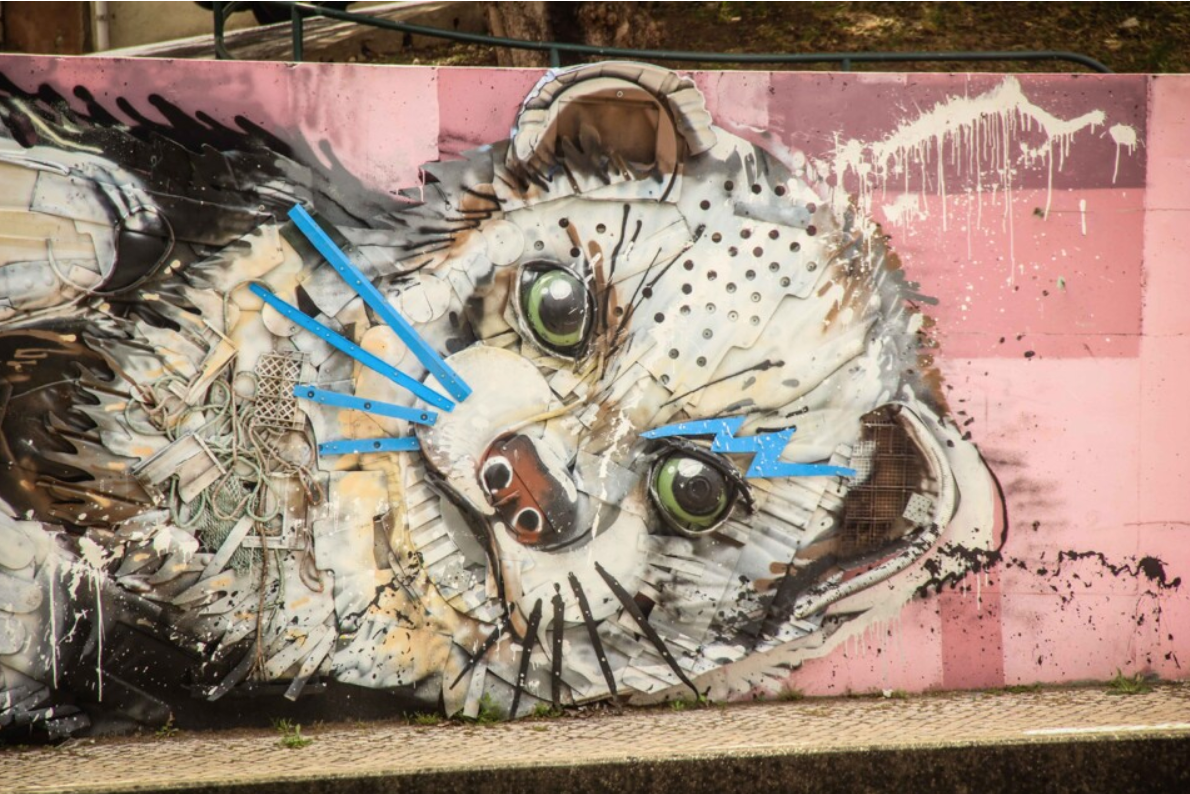
At the heart of Bordalo II’s work is a provocative idea: “one person’s trash is another’s treasure.” He collects discarded objects — old tyres, plastic toys, broken appliances, scrap metal — and transforms them into giant animal sculptures and vivid murals. feed.jeronimomartins.com+2Street Art Bio+2
Through this, he critiques waste, over-consumption, environmental destruction and invites viewers to see materials differently. GraffitiStreet+1
For example:
-
Since around 2012 he has created around 200 large-scale animal sculptures made from 60+ tons of reused materials. Street Art Bio+1
-
Many of these pieces are installed globally — in Lisbon, Berlin, Singapore, the U.S. and Portuguese islands. Wikipedia+1
3. Key Projects & Signatures
Big Trash Animals
This series features monumental animals fashioned from waste and placed in public spaces. The scale and spectacle are part of the message. Wikipedia+2Street Art Bio+2
Railway Series
In Portugal, Bordalo II has also used train tracks and found-iron elements to create murals and installations, often playing with neon and industrial textures. Street Art Bio
Signature Animals & Locations
-
A giant Iberian Lynx in Lisbon’s Parque das Nações (2019) made for the Youth Forum Lisboa+21. getLisbon+1
-
Waste-constructed bees, frogs and raccoons scattered through Lisbon neighbourhoods. Safe and Healthy Travel+1
4. Process & Tools
While there’s less detailed public data on exactly how many screws or what brand of tools are used, the interviews reveal:
-
He (and his team) source abandoned objects and scrap — often visiting breakers’ yards, dump sites and industrial zones. BLOCAL blog+1
-
Work often involves metal frames, welding, sanding, spray painting, and mounting into building facades or free-standing installations. (In one interview: “I always saw my grandfather painting … that influenced my life of course.”) Bombing Science
-
Because of the scale, many pieces are built in workshop or warehouse conditions then mounted externally. A book documenting 2011-2017 shows him stacking bikes, chairs and white garbage bags inside warehouse installations before final installation. Urban Nation
5. What You Can Learn from His Art
-
Material awareness: Recognise how everyday waste can become expressive art. Look at tyre treads, plastic shards or old car parts — can you spot them in his animals?
-
Scale & context: See how placing a giant animal on the side of a building changes the viewer’s relationship — you’re no longer just a passer-by, you’re in dialogue with the wall.
-
Message & medium: He uses playful or beautiful forms (animals) to deliver serious ideas (environmental crisis, species extinction, consumption).
-
Urban placement: His works are not hidden in galleries — they live in the city’s public spaces. That means you can walk up, look closely, ask questions, and move on.
6. Why He’s Important for Street-Art & Public Art
-
He’s part of the new generation blending graffiti, sculpture, installation and activist art into public spaces.
-
The reuse of trash gives his pieces urgency — they speak about the here-and-now issues of waste and consumerism.
-
His global installations show how local material concerns (Portugal’s consumption, waste-processing) can translate into universal messages.
-
Because his work is placed in public, it invites public engagement rather than just gallery viewing.
7. Where to See His Work (Lisbon Highlights)
-
LX Factory, Alcântara: look for the giant bee made of waste. getLisbon
-
Parque das Nações: the Iberian Lynx (10 m+ high) made for a youth environmental conference. getLisbon+1
-
Various “Big Trash Animals” around Lisbon — fish, geckos, raccoons. One write-up lists GPS locations of his pieces. Safe and Healthy Travel
8. Fun Facts
-
His name “Bordalo II” is not about royalty — it’s about legacy: carrying forward the name of his grandfather while using new materials and media. Wikipedia
-
In one work, he laid out a massive “carpet” of giant 500 € banknotes in protest of state spending for a papal visit — showing how art can be direct political commentary. Wikipedia
-
He describes graffiti as his “school” — the place where he learned to move fast, use large surfaces, and not fear working illegally. GraffitiStreet
9. Final Thoughts
When you see a Bordalo II piece, you’re invited to do more than admire it. You’re asked to question: What was here before? Why use this object? What happens after this installation? The materials he uses — waste, scrap, things we throw away — become visible, become meaningful, become urgent. And because they’re in the streets, you can walk up and join the conversation.
If you ever find yourself in Lisbon (or any city with his work), take the time. Look up, look close, and see how trash becomes treasure, and how art becomes a dialogue with our world.
Explore the city with the Street Art Game app
Turn any neighborhood into a creative playground. The app guides you to curated spots, shares the stories behind the murals, and adds quick challenges for motion, discovery, and fun — self-guided, flexible, anytime.
Choose Your City